PDF Ebook Perfect Health Diet: Regain Health and Lose Weight
This Perfect Health Diet: Regain Health And Lose Weight is very proper for you as novice reader. The viewers will constantly start their reading habit with the preferred motif. They could not consider the writer and also author that produce guide. This is why, this book Perfect Health Diet: Regain Health And Lose Weight is actually ideal to review. Nevertheless, the principle that is given up this book Perfect Health Diet: Regain Health And Lose Weight will show you many points. You can start to enjoy also checking out until completion of the book Perfect Health Diet: Regain Health And Lose Weight.
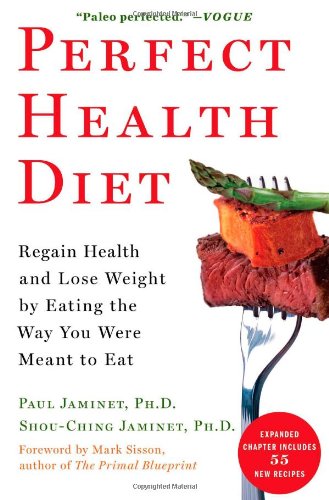
Perfect Health Diet: Regain Health and Lose Weight

PDF Ebook Perfect Health Diet: Regain Health and Lose Weight
Is Perfect Health Diet: Regain Health And Lose Weight publication your favourite reading? Is fictions? Exactly how's concerning history? Or is the best vendor novel your choice to satisfy your leisure? Or even the politic or religious publications are you looking for now? Right here we go we offer Perfect Health Diet: Regain Health And Lose Weight book collections that you require. Bunches of varieties of books from lots of areas are supplied. From fictions to scientific research and also religious can be browsed as well as discovered right here. You might not worry not to discover your referred book to read. This Perfect Health Diet: Regain Health And Lose Weight is one of them.
Postures currently this Perfect Health Diet: Regain Health And Lose Weight as one of your book collection! Yet, it is not in your bookcase compilations. Why? This is guide Perfect Health Diet: Regain Health And Lose Weight that is provided in soft file. You could download and install the soft documents of this magnificent book Perfect Health Diet: Regain Health And Lose Weight currently and also in the web link provided. Yeah, various with the other people who look for book Perfect Health Diet: Regain Health And Lose Weight outside, you can obtain simpler to pose this book. When some individuals still walk right into the store as well as search the book Perfect Health Diet: Regain Health And Lose Weight, you are here only stay on your seat and also get the book Perfect Health Diet: Regain Health And Lose Weight.
While the other individuals in the store, they are unsure to locate this Perfect Health Diet: Regain Health And Lose Weight directly. It might need more times to go store by establishment. This is why we mean you this website. We will supply the very best way and referral to obtain guide Perfect Health Diet: Regain Health And Lose Weight Even this is soft documents book, it will be ease to bring Perfect Health Diet: Regain Health And Lose Weight any place or save in your home. The difference is that you may not require relocate guide Perfect Health Diet: Regain Health And Lose Weight location to location. You could need only copy to the other devices.
Currently, reading this spectacular Perfect Health Diet: Regain Health And Lose Weight will certainly be much easier unless you get download the soft file here. Just right here! By clicking the connect to download Perfect Health Diet: Regain Health And Lose Weight, you could start to obtain guide for your personal. Be the initial owner of this soft file book Perfect Health Diet: Regain Health And Lose Weight Make difference for the others and obtain the initial to advance for Perfect Health Diet: Regain Health And Lose Weight Here and now!
Now in paperback, the simple, science-based, “Paleo perfected” (Vogue) diet that promotes effortless weight loss and peak health—written by two Harvard scientists.
In Perfect Health Diet, Paul and Shou-Ching Jaminet explain in layman’s terms how anyone can regain health and lose weight by optimizing nutrition, detoxifying the diet, and supporting healthy immune function. They show how toxic, nutrient-poor diets sabotage health, and how on a healthy diet, diseases often spontaneously resolve. Perfect Health Diet makes weight loss effortless with a clear, balanced, and scientifically proven plan to change the way you eat—and feel—forever!
- Sales Rank: #30956 in Books
- Brand: Scribner Book Company
- Published on: 2013-12-03
- Released on: 2013-12-03
- Original language: English
- Number of items: 1
- Dimensions: 8.37" h x 1.10" w x 5.50" l, .85 pounds
- Binding: Paperback
- 464 pages
Features
Review
“This is more than a diet. It's a program for perfect health. The result of 5 years of research, the Perfect Health Diet enabled scientists Paul and Shou-Ching Jaminet to cure their own chronic diseases. With more than 600 citations to the scientific literature, Perfect Health Diet explains simply and clearly how to optimize your diet for a lifetime of great health. I've read hundreds of books on nutrition and health in my life, and Perfect Health Diet is at the top of the list." (Chris Kresser, M.S., Lac; integrative medicine practitioner and blogger at ChrisKresser.com)
“The Perfect Health Diet is the missing link. It bridges the gap between the philosophical, broad-based, almost intuitive ancestral approach to health and the hard-core data hounds who need to see proof at every step. The authors are scientists through and through, an astrophysicist and a molecular biologist, who deftly wield the scepter of cold, hard science while paying homage to the inescapable wisdom of traditional, ancestral, evolutionary health.” (Mark Sisson, author of The Primal Blueprint and founder of marksdailyapple.com)
“From the best of what we know about ancestral science and the natural world comes a modern-day formula proven to return us to optimal health. The Perfect Health Diet delivers exactly what it promises.” (Dallas & Melissa Hartwig, authors of It Starts With Food)
“The sanest overview of what to eat I have ever seen. If you are going to read only one thing on the subject, read this.” (Seth Roberts, Ph.D., professor emeritus of psychology at UC Berkeley and author of The Shangri-La Diet)
"Whenever any of my clients ask me a health/performance diet question, I just tell them to go to Perfect Health Diet; I trust that anything that appears in the book has been thoroughly researched and examined. One of my best friends was on the diet while undergoing chemo and his bloodwork numbers were so good that they would have been considered average...for a person without cancer. This book is my number one nutritional resource for my family, friends, and clients.” (Court Wing, Co-founder and Head of Training, CrossFit NYC)
"This book provides the missing link between Paleolithic diets and complete health and vitality, and provides a complete foundation for total ancestral health in the modern age." (Aaron Blaisdell, Professor of Psychology at UCLA and President of the Ancestral Health Society.)
About the Author
Paul Jaminet, PhD, was an astrophysicist at the Harvard-Smithsonian Center for Astrophysics. Paul’s experience overcoming a chronic illness led the Jaminets to develop the views of aging and disease presented in Perfect Health Diet.
Shou-Ching Jaminet, PhD, is a molecular biologist and cancer researcher at Beth Israel Deaconess Medical Center and Harvard Medical School, and Director of BIDMC’s Multi-Gene Transcriptional Profiling Core. Shou-Ching was born in Korea to Chinese parents, attended college at National Taiwan University in Taipei and graduate school at University of Newcastle in Australia, before coming to the US to work at Sloan-Kettering Cancer Center, Children’s Hospital Boston, and Beth Israel Deaconess and Harvard Medical School.
Excerpt. © Reprinted by permission. All rights reserved.
Perfect Health Diet 1 Why We Start with an Evolutionary Perspective
Why understanding the big picture is so crucial to your health.
An ancient Indian story tells of eight blind men trying to discern the nature of an elephant. Each felt a different part and reached a different conclusion about the nature of the elephant.
The poet John Godfrey Saxe reported the outcome:
And so these men of Hindustan
Disputed loud and long,
Each in his own opinion
Exceeding stiff and strong,
Though each was partly in the right
And all were in the wrong.
Much the way experts quarrel about diet!
Why is it so hard to figure out the optimal diet?
Like the blind men in the fable, diet experts begin with no clear picture of what an elephant looks like and after lifelong investigations acquire only a partial grasp of the evidence. The biomedical database PubMed contains more than 22 million articles, and a million new papers are added each year. A typical scientist reads at most a thousand papers per year. No matter how long a scientist’s career, it’s impossible to read more than 0.1 percent of the literature. Most of this reading has to be in the scientist’s specialty—a small part of the elephant.
Adding to the problem is the complexity of human biology. We need to get many nutrients, maybe hundreds, from our food. Food contains thousands of toxins. With so many different ways food can nourish or harm us and so many different ways to assemble foods into a diet, picking out which diet is healthiest is like answering a multiple-choice test that has a billion choices. It’s easy to go wrong.
Looking at all this research is like looking at a disassembled jigsaw puzzle with no picture of the completed puzzle. It’s hard to tell how to put the pieces together.
A Big-Picture View We Can Trust
What we really need is a big-picture view—a view of the whole elephant. We need a reliable guide to the optimal diet, a guide that gives us an approximation to the truth at the very beginning of our investigations. This approximate answer can be a lodestar that guides us through the labyrinth of details, preventing many a wrong turn.
This is where an evolutionary perspective comes in. We know that healthy people and animals are more likely to survive the vicissitudes of life and have children and grandchildren. This means that evolution selects for healthful behaviors—including healthful eating.
If we’re looking for a human diet that evolution guarantees is healthful, the place to start is with the diets of the Paleolithic. The Paleolithic was so long—2.6 million years—that Paleolithic man became highly optimized for the Stone Age environment. In the last 10,000 years, mutations have become much more common due to population growth,1 but most beneficial mutations have not had time to become widespread. The historical era has been a period of genetic diversification and emerging but incomplete adaptation to modern life. That means if we want an environment, diet, and lifestyle that will be healthful for all of us, we have to look back to the Paleolithic.
SCIENCE OF THE PHD
Why We Share a Paleolithic Heritage
The Paleolithic began 2.6 million years ago with the invention of stone tools and ended 10,000 years ago with the invention of agriculture. The Paleolithic lasted a hundred thousand generations and was characterized by small populations, typically, tens or hundreds of thousands; at the end of the Paleolithic the human population was 3 million. The modern era has a large population—7 billion today—but evolution has had little time, less than five hundred generations, to work its magic.
We can calculate how long it will take before every possible mutation appears in some person, somewhere. Every child has a similar number of mutations—about 175 new point mutations among the 3 billion base pairs of the human genome.2
• In the Paleolithic, with 10,000 children per generation, it would have taken 8,000 generations, or 160,000 years, for each possible mutation to occur once.
• Today, with more than a billion children per generation, every possible point mutation now appears about twenty times per generation, or almost yearly.
We can also calculate the time required for a beneficial mutation to reach “fixation,” or universal presence throughout humanity. This time is on the order of ln(N)/s, where N is the population size and s is the selection coefficient, a measure of how beneficial the mutation is in terms of expected number of children.3
• In the Paleolithic, a mutation that raised the probability of having an extra child by only 0.1 percent would have reached fixation in 460,000 years. So a mutation with selective advantage of 0.1 percent would have occurred within the first 160,000 years of the Paleolithic, then become universal 460,000 years later—long before the Paleolithic was over.
• In the modern era, a similar mutation would occur every year but would require 200,000 years to reach fixation. The modern era is less than 10,000 years old, however, so few recently mutated genes have had time to become universal. As a result, our genetic adaptation to the new environment of modern life—agricultural foods, city living, the presence of governments and complex institutions—is incomplete. And human genetic diversity is greater than ever before.
Because mutations that would remove our adaptation to Paleolithic diets have had little time to spread through the population, it is likely that nearly everyone is extremely well adapted to Paleolithic diets. The same cannot be said for modern diets.|Perfect Health Diet 2 The Paleolithic Diet
• Eat real food: recently living plants and animals.
• Eat mostly plants—but low-carb!
• Among plant foods, favor in-ground starches.
• Don’t be afraid to eat fat! Hunter-gatherers flourished on a fat-rich diet.
The premise of “Paleo” diets is that foods hunted and gathered by our Paleolithic (“Old Stone Age”) ancestors represent the healthiest human way of eating, while agriculturally-produced foods may be dangerous to well-being.
There’s solid evidence backing this idea. Direct evidence for the superiority of Paleolithic diets comes from archaeological studies of ancient skeletons. These studies tell us that until the modern era, with our reduced rates of infectious disease, the Paleolithic was the healthiest epoch of human history.
Studies of animals also show that “wild” diets are the healthiest. For example:
• Thirty-two percent of pet cats and dogs are obese,1 but obesity is rare among wild wolves and tigers. It’s not only pets: feral rats living in cities and eating discarded human food have grown increasingly obese in parallel with the human obesity epidemic.2
• Zoo-born elephants live only half as long as elephants living wild in parks such as Amboseli National Park, Kenya.3 Zoo elephants also have much higher rates of obesity than wild elephants. Elephants make a great comparison animal, because they are rarely subject to predation in the wild.
What’s the “wild” human diet? Presumably, the diet obtained the same way wild animals obtain their food: by hunting and foraging in the manner of our Paleolithic ancestors.
READER REPORTS: A Cure for IBS
I’m 62 and have suffered, along with anyone who gets near me, with IBS for the past 25 or so years, and have tried just about every supplement to alleviate the condition without success. Since starting the PHD my symptoms disappeared in less than a week—and haven’t come back. As Billy Crystal would say, “UN beWEEV abo.” Thanks so much.
—Jack Cronk
Paleolithic Health and Neolithic Decline
The tall stature and strong bones of Paleolithic skeletons indicate that Paleolithic humans were in remarkably good health. Paleolithic humans were tall and slender; cavities and signs of malnutrition or stress in bones were rare; muscle attachments were strong, and there was an absence of skeletal evidence of infections or malignancy.4
The adoption of farming in the Neolithic radically changed the diet, and with it came a dramatic loss of health. Farmers needed crops that yielded many calorie-rich seeds from each seed planted, so the harvest could feed the farmer’s family for a year and supply seeds for sowing in the spring. This required a turn of the diet to grains and legumes—foods that, as we shall see, are toxic.
After the adoption of agriculture, stature lessened; smaller tendon attachments show that muscles weakened; bone and teeth pathologies, such as cavities and osteoporosis, became common; hypoplasias show that periods of malnutrition were common; and signs of infections and inflammation became common.
SCIENCE OF THE PHD
The Neolithic Decline
A large number of journal articles, anthropology Ph.D. theses, and books discuss the collapse of health that is visible with the adoption of cereal grain agriculture.5 A few tidbits:
• Average height dropped, bottoming out at about five feet, three inches for men, five feet for women around 3000 B.C.—about five inches shorter than in the Early Upper Paleolithic.6
• Bones from the Neolithic site of Ganj Dareh in Israel, studied by the anthropologist Anagnostis Agelarakis, showed hypoplasias on the teeth, indicative of malnutrition when young; signs of ear infections and gum inflammation; broken or fractured bones; and arthritis. Those who survived childhood struggled to reach middle age.7
• Nine of sixteen Bronze Age mummies—and seven of the eight of people who died after age 45—in the Museum of Egyptian Antiquities, Cairo, had atherosclerosis.8
The drop in stature persisted throughout the agricultural era until modern times. Only in the twentieth century, with rising wealth and the elimination of many infectious diseases, did humans regain Paleolithic stature.
So Paleolithic diets were quite healthful—agricultural diets, not so much.
We’d better look into what those healthy Stone Age hunter-gatherers were eating!
Paleolithic Plant Foods: Savanna Starches
Many people assume that our distant ancestors resembled chimps and gorillas—forest-dwelling apes who ate fruit. That’s a mistake.
Our ancestors had a long association with open woodlands and tree-spotted grasslands. Where the fossils of human ancestors have been found, tree cover was generally less than 40 percent, sometimes as low as 5 percent.9
Fossils testify that our Paleolithic ancestors lived in open, grassy terrain. Fossil hominids lack the stiff spines and long powerful arms of forest-dwelling apes, and appear to have spent much of their time walking bipedally as grassland dwellers do.10 Ape bipedalism has a long history. Ardipithecus ramidus, which dates from about 4.4 million years ago, spent a significant amount of time walking bipedally,11 as did Oreopithecus bambolii, whose fossils date from 10 to 7 million years ago.12 Another bipedal hominoid dates to 21.6 million years ago.13 Very possibly the common human-chimp ancestor was a bipedal ape living in open terrain, and chimps and gorillas adapted to the forest after they diverged from the human line.
Not only did our hominid ancestors live in wooded grasslands, their food came from grasslands too. This has been proven by a clever method—“isotope signatures” of fossilized bones. Combined with the structure of hominid teeth, this evidence tells us that our ancestors were eating savanna tubers, roots, and corms—foods similar to our modern potato and taro. They had invented the digging stick and were eating starch!
SCIENCE OF THE PHD
How We Know Paleolithic Hominids
Ate In-Ground Starches
Carbon comes in heavy (carbon-13) and light (carbon-12) forms, and grasses and sedges (“C4 plants”) incorporate relatively more carbon-13 than other plants. So the carbon-13 to carbon-12 ratio in a skeleton tells us what fraction of the creature’s food was obtained from grassland plants or animals that ate grassland plants.14
There is considerable variability, but in general grassland plants predominated in the diet of Paleolithic and earlier hominids. This created a puzzle, known as the “C4 conundrum.” Hominids such as Australopithecus africanus and Paranthropus robustus did not have the right kind of teeth for eating grasses and were not thought to be major hunters of grazing animals, yet their bones show that they got their carbon from grasses. The resolution of the puzzle: those apes were getting their dietary carbon from C4 plant underground storage organs—tubers and corms similar to the modern potato and taro.15
This emphasis on starchy roots, tubers, corms, and rhizomes continued throughout the Paleolithic. Food residues from Upper Paleolithic sites dated to 30,000 years ago show that the grinding of starchy roots and rhizomes into flours and foodstuffs was a common practice.16 Microfossils on Neanderthal teeth from around 44,000 years ago show evidence of the consumption of many roots and tubers, some of which show evidence of cooking.17 Neanderthal consumption of starchy plants goes back at least 250,000 years.18
Modern hunter-gatherers who live in environments that lack starchy plants all trade for starches produced elsewhere. The anthropologist Thomas Headland proposed that it would not be possible for humans to survive in forest environments without such trade; this was debated as the “wild yam question.”19
READER REPORTS: Weight Loss, Improved Energy
I am in the middle of the wardrobe crisis that I’ve been waiting to have for ten years: all my clothes are too big. I don’t mean a little loose; I mean I perpetually look like I’m headed out to an M.C. Hammer costume contest.
Over the past few months I’ve lost 25 pounds. That’s a good thing, since the drop on the scale was a side effect of lifestyle changes that have left me with more stamina and energy than I had when I was 20.
It’s not an exaggeration to say that the Perfect Health Diet changed my life.
—Jennifer Fulwiler
A final line of evidence—genetics—supports the idea that our Paleolithic ancestors ate starches. Chimps have two copies of the gene for salivary amylase, the enzyme that digests starches. Humans worldwide average seven copies of the gene; aboriginal peoples eating low-starch diets, such as the rain forest–dwelling BiAka and Mbuti pygmies of the Congo Basin, average 5.4 copies.20 A plausible interpretation is that our Paleolithic ancestors ate enough starch to reach 5 to 6 copies of the amylase gene and that subsequent evolution since the Neolithic invention of cereal grain agriculture has increased the amylase copy number a bit further.
Paleolithic Animal Foods
The Paleolithic began with the invention of stone tools about 2.6 million years ago. These tools were used to hunt animals, tear meat, and cut bones to reach the marrow. Bone marrow consumption is attested from 1.9 million years ago.21 The pursuit of marrow, which is nearly all fat, shows that animal fats were a sought-after part of the early Paleolithic diet.
By 1.75 million years ago, ancestral Homo had spread to northern latitudes, where plant foods are relatively scarce. It is likely these northern hominids were eating a meat-based diet.
By 40,000 years ago, we can tell that Neanderthals (hunting herbivores such as mammoths) and humans (hunting many species with an emphasis on fish) were top-level carnivores. Upper Paleolithic humans weren’t getting protein from plants—no beans for them!—and were higher-level carnivores than wolves and arctic foxes.22
SCIENCE OF THE PHD
Isotope Signatures of Protein Sources
Nitrogen is found in protein and comes in heavy (nitrogen-15) and light (nitrogen-14) forms. Whenever an animal eats protein, it tends to incorporate nitrogen-15 in tissues and exhale or excrete nitrogen-14, so the ratio of heavy to light nitrogen increases by 3 to 4 percent with every step up the food chain.
Unfortunately nitrogen-15 is unstable and is only preserved in bones and teeth from the last 50,000 years, so we have no idea how high on the food chain Australopithecus or Homo habilis were. But nitrogen isotope ratios show that both humans and Neanderthals were at the top of the food chain and getting nearly all their protein from animal food sources.
Another sign that Paleolithic humans were doing a lot of hunting is animal extinctions. The arrival of Paleolithic humans in Australia and the Americas was quickly followed by the extinction of large animal species. Earlier, in Eurasia and Africa, species such as mammoths and saber-toothed tigers were hunted to extinction.
Animal extinctions began at an early date. Between 1.9 million and 1.5 million years ago, Homo erectus appears to have caused the extinction of twenty-three of the twenty-nine known species of large African carnivores.23 The six species that survived were “hypercarnivores,” such as lions and leopards, which ate only meat; the twenty-three that went extinct were omnivores such as civets, which scavenged and ate a wide range of foods. It is thought that they went extinct because they were in direct competition for scavenged carcasses with hominids.24
Subsequent advances in human culture were often followed by new animal extinctions. The extinction of elephants from the Levant around 400,000 years ago was probably due to hunting by archaic humans.25
What Was the Proportion of Animal to Plant Food?
Anthropologists debate the relative proportions of plant and animal food in the diet of our Paleolithic ancestors. Unfortunately, for the earlier part of the Paleolithic there is no evidence that directly answers that question.
We do know that a great expansion of brain sizes occurred during the Paleolithic, and it was probably made possible by new calorie-rich food sources. There are two major theories:
1. Stone tools and cooperative hunting enabled our Paleolithic ancestors to obtain fatty animal foods.26
2. Control of fire enabled our Paleolithic ancestors to cook starchy plants, rendering them less toxic and more digestible. This greatly increased the calories obtainable from plant foods.27
The second theory has been popularized by Richard Wrangham in his book Catching Fire: How Cooking Made Us Human. However, most anthropologists favor the first. The use of stone tools coincided with the brain expansion; while the first known use of fire was 1 million years ago,28 routine use of fire may have begun only 300,000 to 400,000 years ago,29 and more sophisticated use of fire such as heat treatment of tools may have begun 164,000 years ago.30
So the foods driving the brain size expansion during the Paleolithic were probably fatty animal foods.
We do have solid evidence for the diets of modern hunter-gatherers, which probably closely resemble the diets of the Upper Paleolithic. They may be our most useful guide to what a “Paleo diet” for modern humans should look like.
Modern Hunter-Gatherer Diets
The first attempt by an anthropologist to quantify the diets of modern hunter-gatherers was the 1967 Ethnographic Atlas of G. P. Murdock, which was corrected in 1999 by J. P. Gray.31 This looked at 229 aboriginal groups still living in a way that resembled their traditional lifestyle.
The data were analyzed by Loren Cordain and colleagues.32 They found that hunter-gatherers obtained most of their energy from animal foods—meat, fish, and eggs:
• 46 hunter-gatherer groups obtained 85 percent or more of their energy from meat, fish, and eggs, but no groups obtained 85 percent of energy from plant sources. There were no vegetarian hunter-gatherers.
• 133 hunter-gatherer groups obtained 65 percent or more of their energy from meat, fish, and eggs; only 8 groups obtained 65 percent of energy from plants.
• The median group obtained 70 percent of their energy from animal foods, 30 percent from plant foods.
Plant foods contain both carbohydrates and fat. Tropical groups ate the most plant foods, and many of those plant foods, such as nuts, coconuts, and palm fruit, were rich in fat. So carbohydrate intake was well below 35 percent for the overwhelming majority of groups.
The data in the Ethnographic Atlas are dated, and some researchers consider them unreliable.33 Fortunately, detailed studies of the diets of authentic hunter-gatherers have been conducted very recently, and they confirm the results from the Ethnographic Atlas. On our blog, we looked at a study of nine hunter-gatherers—Onge of the Andaman Islands, Anbarra and Arnhem aborigines of northern Australia, Aché of eastern Paraguay, Nukak of south-eastern Colombia, Hiwi of Venezuela, !Kung Bushmen of the Kalahari desert of southern Africa, Gwi Bushmen of Botswana, and Hadza of north-central Tanzania—by anthropologists Hillard Kaplan, Kim Hill, Jane Lancaster, and Ana Magdalena Hurtado.34
Every group ate a substantial amount of meat. Animal foods provided 50 to 85 percent of calories. The !Kung ate the least meat but still averaged 0.57 pounds per day of meat.
Roots and other in-ground plants were the most important plant food. Seeds and nuts were a small contributor for every group but the !Kung, who ate mongongo nuts, a fatty food. “Fruits” were more often fatty nuts than the sugary fruits we are familiar with; for instance, the Nukak ate the palm oil–rich fruit of the palm tree, and the Hadza ate a number of fatty fruits. Only the Gwi consumed a significant amount of sweet fruits, chiefly melons.
In eight of the nine cultures, roots were a much more important source of calories than fruits. Among the Gwi, fruits and roots provided an equal share of calories.
Measured by calories, the diets were generally low in carbohydrates and high in fat. Seven of nine cultures—the Onge, Anbarra, Arnhem, Aché, Nukak, Hiwi, and !Kung—ate 10 to 20 percent carbs. For the Gwi San a majority of calories were carbs, and for the Hadza about 40 percent of calories were carbs. For most groups, fat intake ranged from 40 to 70 percent of calories.
Plant and Animal Food Balance
Although carbohydrates are a small part of calories for many hunter-gatherers, this does not mean they are unimportant. In fact, carbohydrates are a prized part of the diet among modern hunter-gatherers.
Indeed, the Mbuti pygmies of the Congo have two words for hunger: “protein hunger” (ekbelu) and “calorie hunger” (njala). In remote hunting camps on the Ituri plateau of the northeastern Congo, Mbuti generate very high hunting returns and dry large quantities of surplus meat for trade but have no access to starchy plants; in their camps they often complain of njala. Similarly, when the Maku hunters of the Amazon Basin run out of cassava in the forest, no matter how much meat they have, they “have no food.”35
READER REPORTS:
“Drying Out” from Too Few Carbohydrates
I reached my weight loss goals by eliminating grains and limiting dairy to butter and cream and reducing fruit intake. That said, over the last month or so, I was wondering why my body seemed to be drying out from the inside out. I wanted to tweak my diet to optimum health and found your book. The information about the importance of mucin was helpful. What was missing in my diet were the carbs that you recommend. Sweet potatoes, white rice etc. Maybe less protein than I’ve been eating and more saturated fat. . . .
I’m having better results every day. I am fascinated that I have a laboratory of my own body to put your ideas to a test and have them show positive results. Thank you both so much.
—Doris Hames, Atlanta, Georgia
The natural inference is that a healthful diet needs a certain amount of plant foods to balance its animal foods. As we’ll see, starchy in-ground plants are so calorie poor that even obtaining a mere 15 percent of calories from carbs means consuming more plant foods than animal foods by weight. The Paleolithic diet may have been low-carb, but it wasn’t low-plant.
Takeaway: The Diet of the Paleolithic
The Paleolithic diet was a fat-predominant, low-carbohydrate diet. Calories came mainly from fat-bearing animal foods, but plant foods were an essential part of the diet and comprised most of the weight. Typically:
• Carbohydrates made up 15 to 20 percent of calories, with excursions toward 50 percent depending on food availability. Most calories came from fatty animal foods.
• Plant foods consisted predominantly of starchy in-ground carbohydrate sources such as roots, rhizomes, tubers, and corms plus above-ground fat sources such as coconuts, palm fruit, and mongongo nuts. Sweet fruits were rarely a major part of the diet.
It was on a majority-fat, low-carb diet mainly composed of animal foods and in-ground plants that our ancestors evolved from a regional population of small-brained African apes numbering (probably) in the tens of thousands to a highly intelligent species at the top of the food chain and a global population in the millions.
As our Paleolithic ancestors who dominated the globe were characterized by tall stature and healthy teeth and bones and their health deteriorated as soon as their diet was altered, we think it’s safe to say that such a low-carb, high-plant, starch-meat-and-fat-based diet is a healthful human diet.
Most helpful customer reviews
6 of 6 people found the following review helpful.
I recommend this to anyone who will listen
By Elizabeth Piazza
This book is pretty heavy on the science and thought process behind the Jaminet's recommendations. They very logically and methodically made observations about human biology and the effect of foods, did heavy research, and formed hypotheses on why certain dietary guidelines put humans in a more optimal state.
I think everyone should have this info, and the book lays it out great. I do think one drawback is that the book is a little too dry at times and may lose the interest of a more casual reader. This would have knocked my review down to 4 stars if it weren't for the excellent summaries and recommendations stated clearly at the end of each section that explains what the reader should be taking away from the information.
259 of 269 people found the following review helpful.
Very solid overview for healthies!
By Jodi-Hummingbird
Don't let the somewhat corny title of this book put you off. This book is a wonderful and very simple introduction to real healthy eating for anyone currently eating a average-quality diet.
Great things about this book:
1. For those that just want the facts super-fast this book gives you a one page summary of the eating plan within the first 6 pages of the book. The book also contains lots of extra information backing up their conclusions as well, for those that want it.
2. This book is about eating healthily and how to improve your health and reduce your risk of getting ill in the future with diet - rather than just about mere weight loss - which is so refreshing. Slow weight normalisation is a side effect of following this diet for sure, but it is not the primary focus.
3. The research for the book began when the authors were each working to improve their own health issues through diet. The authors are genuinely nice people that are passionate about helping others get the same results they have and the subject of a healthy diet and this comes through clearly on every page of this book.
4. The diet the authors recommend is made up of 20% carbs, 65% fat and 15% protein. So it is a low/moderate carb, high fat and moderate protein diet by calories, and 35% animal foods and 65% plant foods by weight. This is very similar to a traditional Pacific Islander diet, the authors explain.
The sections explaining the facts of fats, carbs and protein are of a very high quality and seem to summarise the work of all the best books I have read on nutrition and diet lately. The problems with a high carb diet are clearly spelled out as are the benefits of a high fat diet.
5. The book also recommends avoiding all grains (other than rice), legumes, dry lean meats, vegetable oils and pasteurised dairy products and recommends eating unlimited non-starchy vegetables (750 grams a day or more or 1.5 pounds), 200 - 450 grams or so (0.5 to 1 pound) of fatty meat/seafood/eggs, about 4 teaspoons of healthy fats (ghee, lard and coconut oil and a bit of olive oil), and snacking on nuts, cheese and fruit.
The authors warn that while fibre can be helpful, for some people too much fibre can be a real problem.
6. Where this book differs from many others in the same (reduced-carb and traditional foods) vein is that it explains that, yes, while your body can make the glucose it needs from protein when you eat a low carb diet, this process taxes the body unnecessarily and the conversion may be inefficient. This is especially true for those that are ill, the authors explain.
Despite my making a bit of a hobby of reading a large amount of very good books on healthy eating and diet in recent years, no other book had made these same points. So having this explained so well finally was wonderful and it explained a lot!
(I did really well on a 20 grams of carbohydrate a day diet for 6 - 9 months or so. I felt well and had no more hypoglycemia and lost a lot of weight. But after that 6 months was up my body seemed to really struggle with it, perhaps due to the fact I have severe metabolic, endocrine, and cardiac problems. (I'm housebound and 95% bedbound and very disabled.) When I finally went back up to 50 - 75 grams of carbs a day (years later) I felt so much better, and finally was able to start losing some of the weight that had crept back on on my super-low carb regime. It was also a much more pleasant way to eat; being able to have 5 cups of veggies a day and a bit of fruit! I feel like staying on this super-low carb diet for so long delayed my health from beginning to improve as well, as it made my body work harder than it had to on food assimilation which of course leaves less metabolic energy and bodily resources left over for the work of healing.)
The book explains that eating very low carb and making your body convert proteins to carbs puts strain on the liver and uses up bodily resources, generates ammonia as a toxic by-product, puts a person at risk of glucose deprivation if the are ill or lacking in certain nutrients and makes nutrient deficiencies more likely due to lower fruit and vegetable intake. Very low carbohydrate intake can also cause problems with vitamin C utilisation that may even lead to scurvy, as vitamin C is stimulated by insulin. For these reasons they recommend eating an amount of carbs daily which is very close to how much the body actually needs; 200 - 400 carb calories daily (or roughly 50 - 100 grams of carbs daily).
I agree with the authors that healthy people will likely have few problems converting one macronutrients to another (such as protein to carbs, and carbs to fat) but for those of us that are ill it is best to save your body the work and to eat foods in the appropriate macro-nutrient percentages to start with. That just seems to make so much sense!
Things about the book I am not sure about, to some entent:
1. I'm not convinced that all of us can handle the foods the authors describe as "safe starches" and in those amounts. For me eating rice with meals gives me so much carbohydrate it leaves me feeling spacey, hungry and unsatisfied. I am also unconvinced that eating rice is better for you than eating the same amount of carbs in vegetable form, as the authors even say themselves in the book that rice is low in nutrients compared to other foods, calorie for calorie. There is no real nutrition in it, and so for me no reason to eat it - and lots of reasons not to.
I found it even more surprising that not only did the authors recommend eating rice often, but they even extended this to processed foods like rice crackers and rice noodles. Foods many of us with an interest in healthy eating and nutrient-dense eating just wouldn't want to eat at all.
I recommend trying the authors' "safe starches" idea and seeing if it works for you, but being aware that for some of us these foods may be best avoided or minimised and eating LOTS of non-starchy veggies and 2-3 serves of fruit may work better for you.
2. Like many others I also cannot tolerate any of the dairy products the author recommends and also have egg allergy issues. I feel these issues could have been discussed a bit more in the book, as they are so so common. I also think fermented foods and drinks could have been emphasised more and disagree with the authors' assertions that nuts and seeds need only be soeaked if you eat a lot of them. For those of us with lots of gut and digestion problems, soaking all nuts and seeds can make a wonderful difference that is really noticeable.
(I wish so much I had learned about the importance of soaking nuts and eating fermented foods sooner!)
3. While this book provides a great summary of many of many of the best books on nutrition, the same cannot be said of the information given on supplements. This information was very patchy, incomplete and just plain wrong in many instances and it does not at all tally with the information given by those that are the genuine experts in this field. The information seems to come from strange sources, and not from genuine experts in the field. The RDAs are quoted a lot and discussed as if they were important and trustworthy and no names of orthomolecular experts or similar are really mentioned.
Such an average quality and incomplete guide may be okay for healthy people but for anyone battling serious health issues I would urge them to read far more deeply on this topic than this book allows and to ignore much of the information given in this book.
Despite what the authors of this book claim, those of us with serious health issues absolutely need intelligent and often intensive and wide-ranging supplementation along with a healthy diet before we can start to regain our health. We need as much of each nutrient as we actually need, and not just how much the RDA has been arbitrarily set at. Supplement plans must be individualised, as much as possible. We also need to take the right balance of nutrients, and not lots of one thing and none of another related thing. This has absolutely been my experience and holds true for vast numbers of other patients.
This sort of diet change is always the first step in improcving health however, and for some lucky people it may be enough. For others it is just the first essential step of many others!
(See: Detoxify or Die, Orthomolecular Medicine for Everyone: Megavitamin Therapeutics for Families and Physicians, Primal Body, Primal Mind: Beyond the Paleo Diet for Total Health and a Longer Life and Dr. Atkins' Vita-Nutrient Solution: Nature's Answer to Drugs and others, for more information on this topic.)
4. The book could have done with having wider margins and more white space on the page, as well as fewer black and white images of foods (many of which looked awful or were hard to make out). Overall the book was very well put together and well edited, however.
Even if you have read the wonderful books by Taubes, Fallon and Enig, Gedgaudes, Cordain, Price, Sisson, Schwartzbein, Shanahan, Eades etc. this book is still worth reading.
I rate this as a 5 star book for healthy people who want to learn to eat better, but not quite a 5 star book when it comes to being a complete guide for those battling serious illnesses. It isn't a complete guide to health for ill people, just a very solid starting point on diet. So that is why I give the book 4 stars overall.
Jodi Bassett, The Hummingbirds' Foundation for M.E. (HFME) and Health, Healing & Hummingbirds (HHH)
7 of 7 people found the following review helpful.
Completes and compliments Paleo diets - goes where they cannot
By HS4
I've been trying for several years to follow a Paleo way of eating with limited success. It wasn't until I read Perfect Health Diet that I realized what was missing - some 'safe' starch daily. As soon as I added some white rice or sweet potato, the edginess i'd always felt with Paleo disappeared, and cravings started to reduce significantly. I am also finding that the correct trace elements are also very important as well. The authors discuss why specific micro-nutrients are vital parts of our diets - ideally to be obtained from whole foods, but some as supplements.
The book is very well written and even though it covers some lightly technical areas, it's always interesting with clear explanations of their ideas. Every claim Jaminet makes is backed up by extensive references and notes for each chapter. There are over 1200 references but not one is actually in the book! All references are online on their website, along with the latest scientific information on many different aspects of their recommended diet. The website is active with questions from readers, discussions of relevant topics, and serves as a constantly-updated companion to the book. The site also contains recipes and lots of ideas (not just from the Jaminets but also from readers) on how to put the dietary recommendations into action.
For anyone interested in optimizing their diet for the best health I highly recommend this book.
See all 440 customer reviews...
Perfect Health Diet: Regain Health and Lose Weight PDF
Perfect Health Diet: Regain Health and Lose Weight EPub
Perfect Health Diet: Regain Health and Lose Weight Doc
Perfect Health Diet: Regain Health and Lose Weight iBooks
Perfect Health Diet: Regain Health and Lose Weight rtf
Perfect Health Diet: Regain Health and Lose Weight Mobipocket
Perfect Health Diet: Regain Health and Lose Weight Kindle
Perfect Health Diet: Regain Health and Lose Weight PDF
Perfect Health Diet: Regain Health and Lose Weight PDF
Perfect Health Diet: Regain Health and Lose Weight PDF
Perfect Health Diet: Regain Health and Lose Weight PDF